SEM specialists
Taught by practising Sports and Exercise Medicine specialists who perform joint and soft-tissue injections in clinic.
A practical one-day hands-on musculoskeletal injection course led by practising Sports and Exercise Medicine specialists. Develop clinical judgement, surface landmarking, and safe needle technique on high-fidelity 3D-printed joint phantoms.
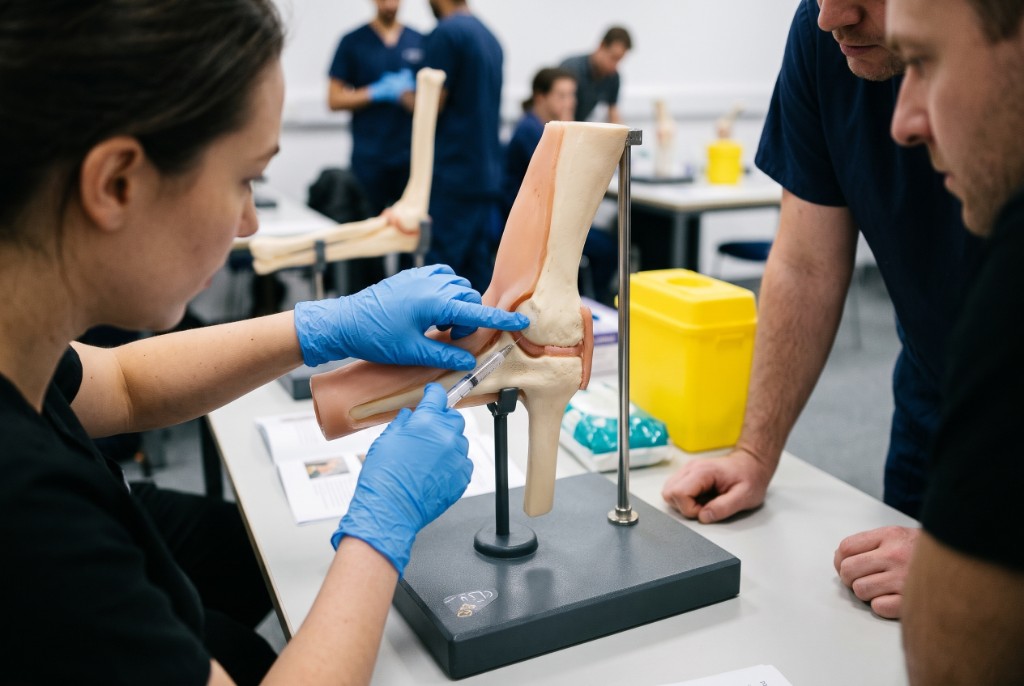
Overview · What you learn
Safe injection practice starts with knowing when to inject, when to refer, and when to wait. This one-day workshop combines that decision-making with hands-on simulation across major peripheral joints and soft tissues.
You practise surface and bony landmark palpation, patient positioning, and needle trajectory, including the neighbouring structures to protect. The practical work is relevant to corticosteroid, hyaluronic acid, PRP, and orthobiologic practice.
Taught by practising Sports and Exercise Medicine specialists who perform joint and soft-tissue injections in clinic.
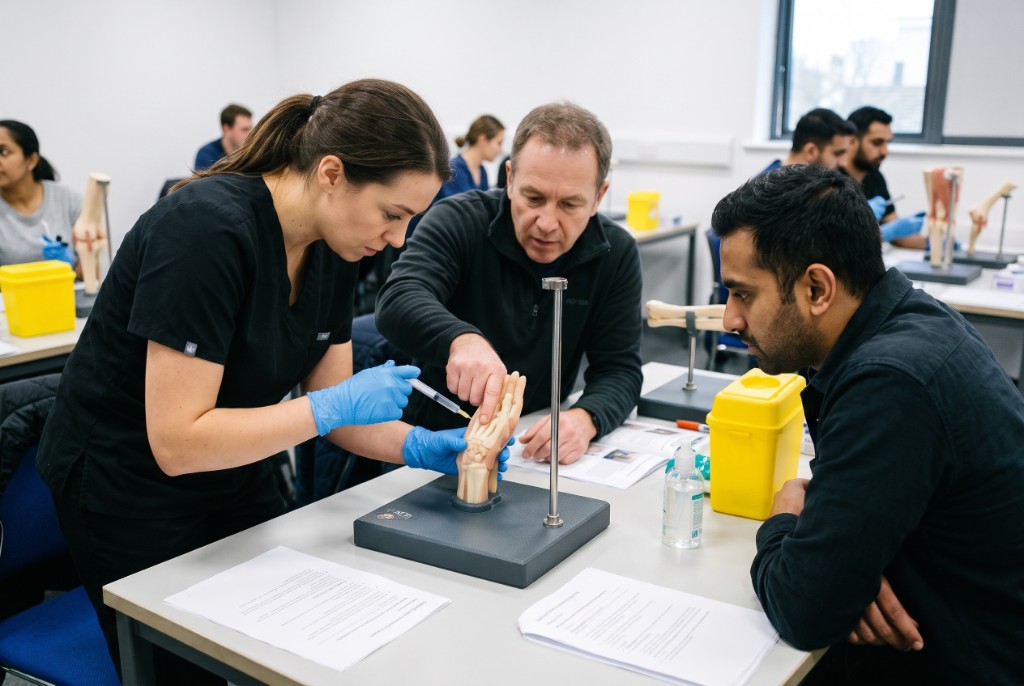
Anatomically shaped phantoms, with bony landmarks and soft tissue made to give realistic resistance.
A phantom for each pair, so the day is spent on needle repetition rather than watching a single demonstration.
Individual feedback during the stations. This is practical coaching, not a lecture day and not a pass-or-fail exam.
Who it is for
Registered clinicians, including GPs, GP trainees, physiotherapists, nurses, hospital doctors, paramedics, and advanced clinical practitioners.
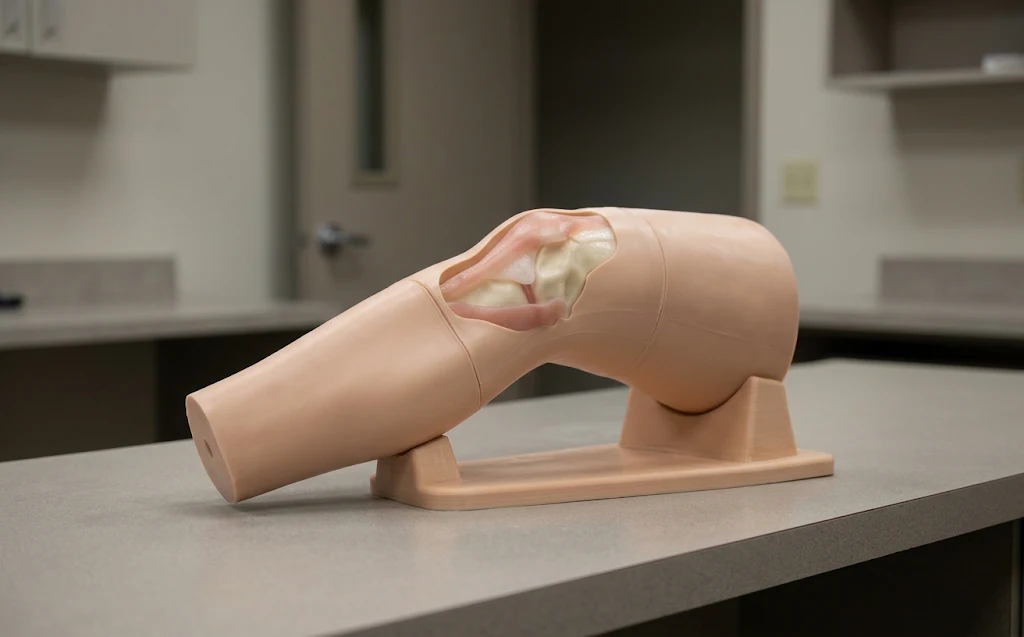
The day covers surface landmarks and safe needle handling if you are new to landmark-guided injections, positioning and palpation with a specialist beside you, and a refresh of approaches you already use, including less frequent targets.
The phantoms · AX-SHD-01
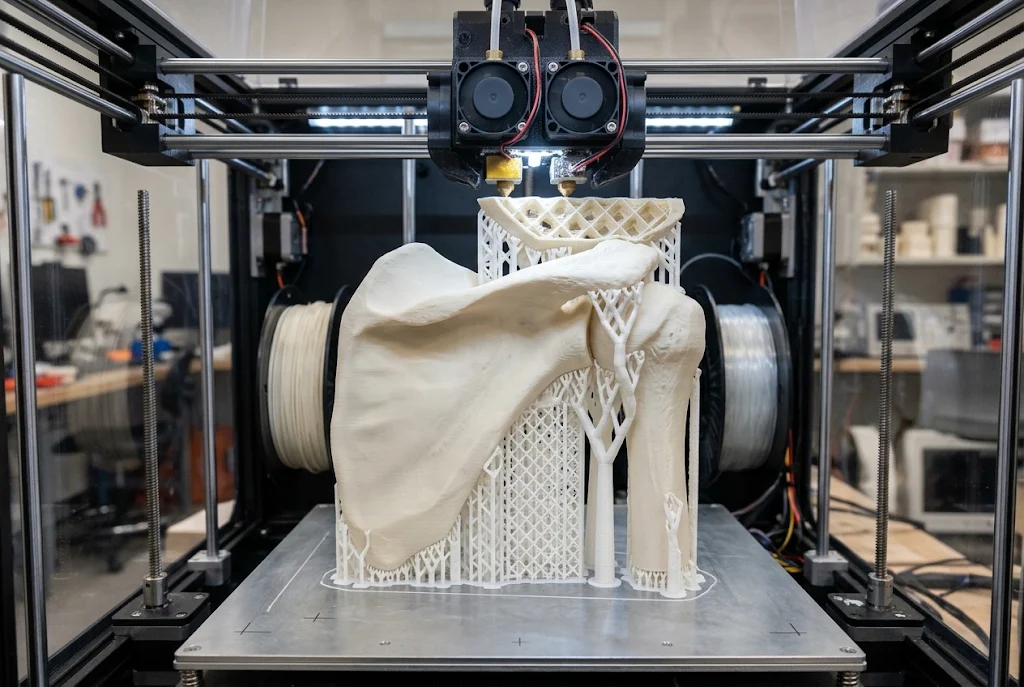
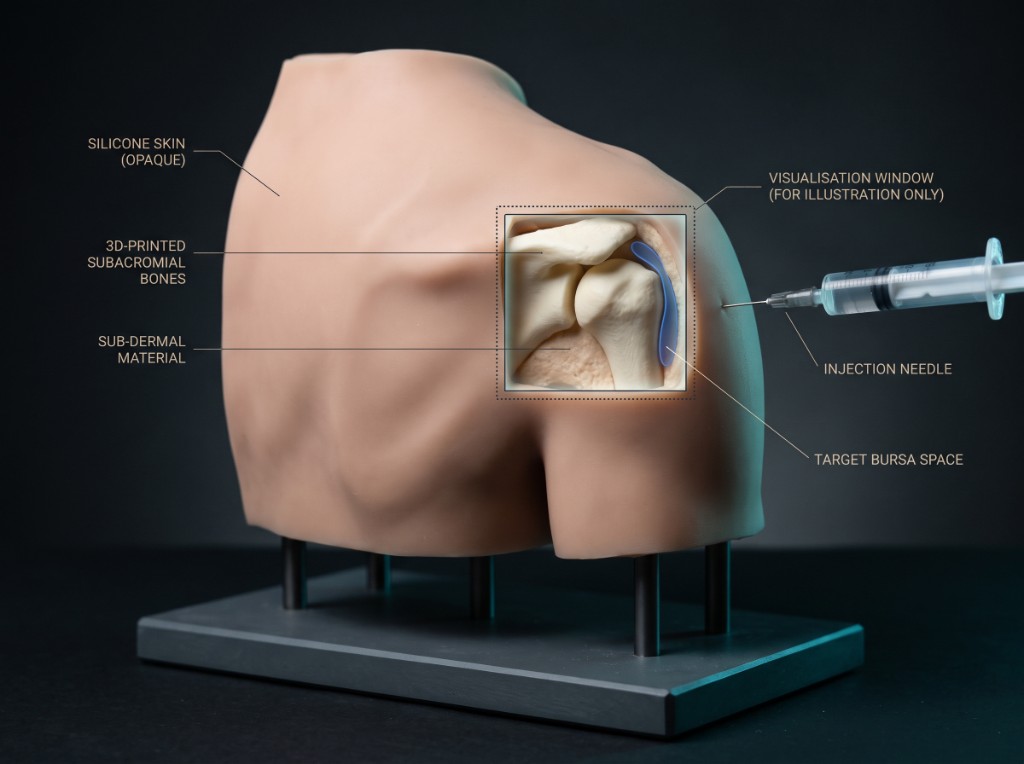
Stage 02 is an illustrated shoulder cutaway. The window in that picture is marked for illustration only.
Courses · 6 practical stations
Choose a station. This is the planned practical content, not a licence to inject.
Patellar pouch, tibiofemoral joint space, iliotibial band bursa and pes anserine bursa.
Safety focus. Superolateral patellar border for intra-articular entry, avoiding cartilage scuffing and protecting the saphenous nerve medially.
Subacromial bursa, acromioclavicular joint, glenohumeral joint and bicipital groove.
Safety focus. Posterolateral acromial corner for subacromial placement, avoiding the cuff tendon and protecting the axillary neurovascular bundle.
Assessment and injection technique for the trochanteric bursa.
Safety focus. Lateral positioning and greater trochanter mapping, staying well away from the sciatic nerve.
Medial and lateral epicondyle, radiocapitellar joint and olecranon bursa.
Safety focus. Lateral soft-spot palpation, and ulnar nerve protection on medial approaches.
Tibiotalar joint, first interphalangeal joint, plantar fascia and Morton's neuroma.
Safety focus. Anteromedial tibiotalar window and dorsal intermetatarsal entry, avoiding plantar fat-pad injury.
Trigger finger, carpal tunnel, first MCP joint, De Quervain's area, and carpal joints.
Safety focus. Median nerve protection at the carpal tunnel, radial sensory branch awareness at De Quervain's, and A1 pulley placement.
Planned day · 09:00–17:00
Short clinical briefings, then four 70-minute small-group phantom rotations. This timetable is the plan for the day. It is not a date you can book yet.
FAQ
Regulated healthcare professionals with an active registration, including GPs, GP trainees, hospital doctors, physiotherapists, nurses, paramedics, and advanced clinical practitioners (GMC, HCPC, or NMC).
Yes. Stations are taught in small groups at a 1:2 model-to-delegate ratio, for people learning landmark technique and for people who already inject. It is still practical training, not permission to inject on your own.
No. The day is simulation training. An attendance certificate is a record that you were there. It is not a qualification to inject independently, and it is not a CPD-points award. Independent practice depends on your professional body, your employer’s governance, and supervised competency sign-off. Physiotherapists need training that meets Chartered Society of Physiotherapy expectations.
You can attend. The course does not make you a prescriber, and it does not create a patient group direction (PGD) or a patient specific direction (PSD). Giving a prescription-only medicine in practice still depends on your profession, your employer, and a valid written direction.
Feedback is formative. Tutors watch landmark palpation, aseptic handling, needle trajectory, and safety checks during the rotations. There is no pass-or-fail examination.
No. Manchester, March 2027, a fee of £350, and 16 places are listed. This website does not take payment or reserve a place. A specific day, the teaching address, and the cancellation terms are not published yet.
Includes
This website does not take payment or reserve a place.